
Ordering custom leotards for an entire gymnastics team is exciting, until sizing becomes part of the conversation.
Most coaches are comfortable evaluating designs, choosing colors, and coordinating athlete preferences. But when it comes to determining the correct size for 12, 20, or even 100 gymnasts, uncertainty quickly appears.
What if an athlete falls between sizes? What if a gymnast grows before competition season? What if multiple leotards arrive and several athletes need exchanges?
These concerns are common, and they’re one of the biggest reasons coaches hesitate before placing a custom order.
In this team leotard sizing guide, we’ll walk through the challenges of sizing a gymnastics team, explain the most common mistakes, and show how a structured sizing process can dramatically reduce errors before production begins.
If you’re exploring options for custom team gymnastics leotards, this guide will help you approach sizing with confidence.
Why Team Sizing Is Harder Than Individual Sizing
Sizing a single athlete is relatively straightforward. Sizing an entire gymnastics team is a completely different challenge. Unlike individual retail purchases, team orders often involve:
-
Athletes of different ages and body types
-
Growth spurts during the season
-
Multiple training groups
-
Parent involvement
-
Coaches managing dozens of measurements simultaneously
-
Tight production timelines
Even when athletes know their current clothing size, gymnastics apparel fits differently than everyday clothing.
A gymnast who wears a youth medium in regular apparel may need a completely different size in a competition or training leotard depending on torso length, body proportions, and fit preference.
This is why relying solely on estimated sizes often creates problems later. The larger the team, the greater the risk that small sizing inaccuracies multiply across the entire order.
The Hidden Cost of Sizing Errors (And Why Coaches Lose Sleep Over This)
When coaches think about sizing mistakes, they usually think about athlete comfort. In reality, the consequences go much further. Incorrect sizing can create:
Delays Before Competition Season
If athletes receive leotards that don’t fit properly, teams may need exchanges or alterations, which can create unnecessary stress before important events.
Additional Administrative Work
Every sizing issue requires communication between coaches, athletes, parents, and vendors. For busy coaches already managing practices, travel plans, and competitions, this quickly becomes time-consuming.
Athlete Dissatisfaction
Gymnasts want to feel confident in their uniforms. A leotard that feels too tight, too loose, or restrictive can affect comfort and confidence during training and competition.
Budget Impact
Sizing corrections after production may involve shipping costs, rush production fees, or replacement garments depending on the situation. Most coaches would rather spend extra time upfront preventing errors than solving them later. That’s why an organized sizing process is so important.
How Most Teams Handle Sizing Today (And Where It Falls Short)
Many gymnastics programs still use one of the following approaches:
Using a Size Chart Only
The coach distributes a size chart and asks athletes or parents to submit measurements.
While this seems simple, it introduces several variables:
-
Measurements may be taken incorrectly
-
Parents may use different techniques
-
Athletes may round measurements
-
Fit preferences vary significantly
Even small measurement inaccuracies can affect sizing recommendations.
Ordering Based on Current Apparel Size
Another common method is asking athletes what size they currently wear. The problem is that sizing varies between brands. A gymnast’s current leotard size from another manufacturer doesn’t always translate perfectly to a new custom uniform. Even within the same brand, different styles or back designs can fit differently, so the size may not always be the same.
Guessing Based on Previous Orders
Some teams simply reorder the same sizes used in prior seasons. While this may work for returning athletes, it becomes much less reliable when gymnasts experience growth spurts or when new athletes join the team. These methods aren’t necessarily wrong, but they all rely on assumptions. The most accurate approach involves physically trying on garments before finalizing sizes.
Introducing the Bold&Grit Sizer Kit: How It Works
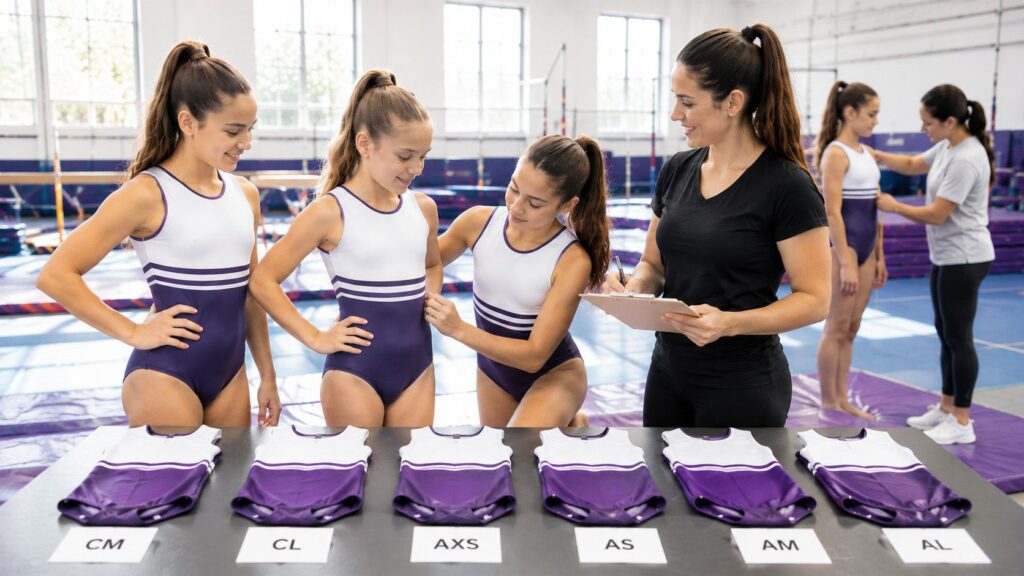
To help coaches eliminate sizing uncertainty, we offer a sizer kit process for team orders. Instead of relying exclusively on measurements or size charts, athletes can physically try on sample sizes before production begins. This allows coaches to make sizing decisions with significantly more confidence.
What’s in the Kit and How We Ship It to Your Gym
Once your project moves forward, we prepare a sizer kit tailored to the specific products included in your order.
If you’re ordering bomber jackets, we’ll send bomber jacket sizers. If you’re ordering gymnastics leotards with a specific back design, we’ll provide sizers featuring that same back style whenever available. Need a unisex fit? We’ll send unisex sizing samples. Our goal is to make the fitting process as accurate and representative as possible.
In cases where your design is based on a brand-new pattern or style that is not yet available in our sizer inventory, we’ll send the closest available sample and clearly explain any fit differences your team should consider when selecting sizes.
The kit is shipped directly to your gym so athletes can complete fittings in a familiar environment during practice. This approach eliminates much of the guesswork and allows coaches to evaluate fit across multiple athletes in a single session.
Many teams find that a brief, organized fitting session provides far more reliable results than collecting measurements individually or relying solely on size charts.
The same sizer-set approach works for custom warm-ups, so the full team kit fits from day one.
Step-by-Step Sizing Session With Your Athletes
A typical sizing session looks like this:
Step 1: Schedule a Team Fitting
Choose a practice day when most athletes will be present.
Step 2: Organize Athletes by Age Group
This helps streamline the fitting process and reduce waiting time.
Step 3: Try Multiple Sizes When Needed
If an athlete falls between sizes, coaches can compare options directly.
Step 4: Evaluate Fit in Motion
Gymnasts should move naturally during the fitting process.
Basic stretching and gymnastics movements often reveal fit issues that aren’t obvious while standing still.
Step 5: Record Final Sizes
Once the correct size is identified, coaches simply document the selection for each athlete.
This process creates a much more accurate sizing outcome than relying on estimates alone.
Once your athletes have been fitted, you’ll complete your purchase order with the final sizes for each athlete and submit it to our team.
We recommend taking the time to review all sizes before submitting the order, especially for athletes who are between sizes or expected to experience significant growth before the season begins.
Once we receive your purchase order, those sizes become the basis for production. Our team will review the order and may reach out if we notice anything unusual or have questions about a particular size selection.
This process helps ensure that production begins with the most accurate sizing information possible, giving coaches greater confidence that athletes will receive uniforms that fit as expected.
When to Size Up vs. Size Down: Sport-Specific Tips
One of the most common questions coaches ask is: “Should we size up or size down if an athlete is between sizes?” The answer depends on several factors.
Consider Growth Timing
For younger athletes expected to grow significantly before competition season, sizing up may sometimes be appropriate. However, excessive room can affect appearance and comfort.
Evaluate Torso Length
Gymnastics leotards are heavily influenced by torso measurements.
Athletes with longer torsos often present one of the biggest sizing challenges for coaches. While some brands require these athletes to size up, we offer a Long Torso option that adds length where it’s needed without forcing gymnasts into a larger overall size.
This helps athletes achieve a more comfortable fit while maintaining the intended look and performance of the leotard.
Consider Athlete Preference
Some gymnasts prefer a compressive fit, while others prefer slightly more room. Comfort should always remain part of the conversation.
Competition vs. Training Use
Competition leotards are often expected to have a more precise fit, while training garments may allow slightly greater flexibility.
Whenever possible, a physical fitting remains the best way to resolve sizing uncertainty.
Sizing Mistakes We See Most Often (And How to Avoid Them)
After working with gymnastics teams across the country, we’ve noticed several recurring sizing mistakes.
Mistake #1: Ordering Based on Street Clothing Sizes
Every apparel category fits differently. Always evaluate gymnastics-specific sizing rather than everyday clothing sizes.
Mistake #2: Measuring Without Consistency
Different people measuring athletes often produce different results. If measurements are used, follow a standardized process.
Mistake #3: Ignoring Growth Spurts
Youth athletes can change size surprisingly quickly. Consider timing between fitting sessions and delivery dates.
Mistake #4: Choosing Sizes Too Quickly
If an athlete is clearly between two options, encourage them to try both. A few extra minutes during fitting can prevent future issues.
Mistake #5: Skipping a Formal Sizing Session
Teams that organize a structured fitting process typically experience fewer sizing concerns later. The more systematic the process, the better the outcome.
The Best Team Leotard Sizing Strategy Is the One That Removes Guesswork
Ordering custom uniforms doesn’t have to be stressful.
The most successful gymnastics programs treat sizing as a process rather than a quick administrative task.
A structured fitting session, accurate records, and physical sample garments dramatically reduce the likelihood of sizing issues later.
If you’re currently evaluating custom team gymnastics leotards, taking the time to implement a reliable sizing process can save hours of frustration and help ensure athletes feel confident when their uniforms arrive.
Ready to simplify team sizing? Request a free sample and ask about our sizer kit process, or explore our custom team gymnastics leotards to learn more about how we support coaches from design approval through final delivery.