
Designing custom gymnastics leotards for your team can feel exciting, and a little intimidating.
Many coaches have a clear vision for their program but aren’t sure how to turn that vision into a finished design. Others know they want something unique but have no idea where to start.
Do you need a sketch?
Should you know exactly where every crystal goes?
How many revisions are normal?
What happens if you don’t like the first design?
The good news is that creating custom team apparel is much easier than most coaches expect.
In this guide, we’ll walk through the entire custom team leotard design process, from your first idea to the moment your mockup is approved for production.
Whether you’re designing your first custom leotard or looking for a better experience than you’ve had with previous vendors, this article will show you exactly what to expect.
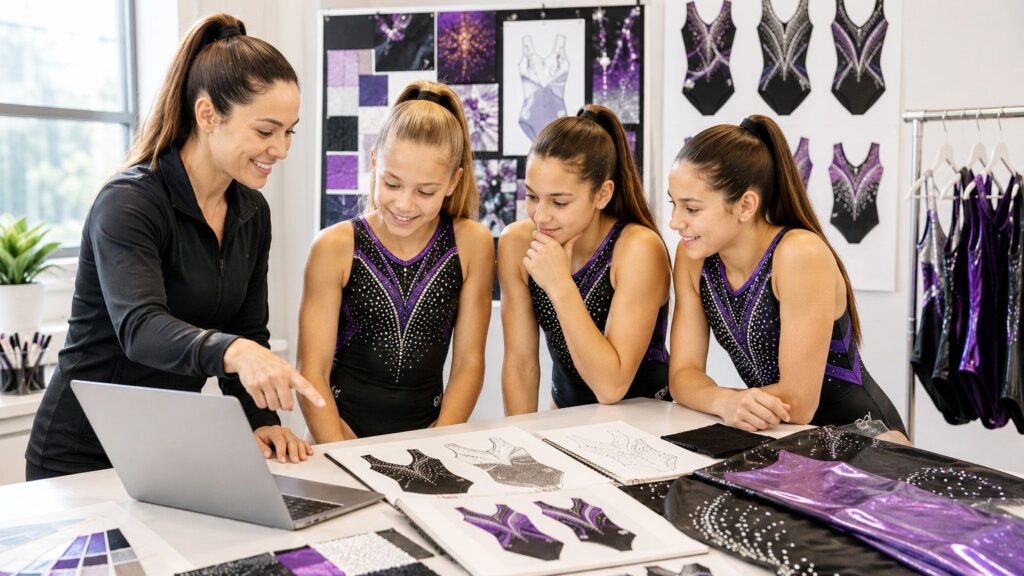
Before You Reach Out: What to Bring
One of the biggest misconceptions about custom apparel is that you need a fully developed design before contacting a manufacturer.
You don’t.
In fact, most coaches start with little more than a few ideas.
Before submitting a design request, it helps to gather:
-
Team colors
-
School or gym logo
-
Inspiration photos
-
Favorite leotard styles
-
Competition themes
-
Brand guidelines (if applicable)
-
Examples of designs you love—or dislike
Some coaches send a detailed sketch. Others send screenshots from Pinterest and write, “Something like this, but make it our own.” Both approaches work.
The more information you provide, the easier it is for designers to understand your vision, but you don’t need to have every detail figured out before reaching out.
Sending Your First Design Request
Once you’re ready to begin, you’ll submit your design request. At Bold&Grit, the process is intentionally simple, but spending a little time gathering ideas beforehand can make a big difference.
We’ll typically ask for:
-
Team name and logo
-
Preferred colors
-
Approximate quantity
-
Inspiration images
-
Notes about what you’re hoping to create
Before submitting your request, we encourage coaches to have an initial conversation with their athletes and staff about the overall direction of the design.
What style are you looking for?
Elegant or bold?
Classic or modern?
Minimalist or heavily embellished?
Do you want geometric elements, ombré effects, metallic accents, florals, animal-inspired details, or something completely different?
The clearer your vision is, the easier it is for our designers to create concepts that align with your expectations from the very beginning.
That doesn’t mean you need a finished design. Many teams come to us with a collection of inspiration images, favorite colors, and a general idea of the look they’re trying to achieve.
If you’re not sure where to start, our design team can absolutely help guide the process and suggest creative directions. However, narrowing down your preferences early helps avoid situations where the design feedback shifts dramatically from one concept to another. For example, it’s difficult to create a focused design process if one round is inspired by jungle animals and the next is inspired by neon bubbles.
The goal of the first submission isn’t to provide a finished design. It’s to establish a clear creative direction that allows our designers to develop concepts that truly reflect your team.
How Our Designers Translate Your Idea Into a Mockup
Once we receive your request, our design team begins transforming your ideas into visual concepts. This is where experience matters. Professional sportswear designers don’t simply copy inspiration photos. Instead, they look for recurring themes, preferences, and visual cues that help communicate your team’s identity.
For example:
A coach might say: “We want something elegant, modern, and different from what we’ve worn before.”
Another coach might say: “Our school mascot is a tiger, but we don’t want the design to look childish.”
Both requests provide valuable creative direction.
The designer then combines those inputs with construction knowledge, color theory, performance considerations, and current trends to create initial concepts.
At Bold&Grit, we provide up to three initial design proposals so coaches can explore different creative directions before choosing a favorite.
This stage is often where teams realize possibilities they hadn’t even considered.
What a Good First Mockup Looks Like
Many coaches expect the first mockup to be perfect. In reality, the first mockup is usually a starting point.
A successful first mockup should:
-
Capture the overall direction
-
Reflect your team’s identity
-
Demonstrate the color palette
-
Show key design elements
-
Provide enough detail to guide feedback
Think of the first mockup as the first draft of a conversation. Sometimes coaches fall in love with the very first concept. More often, the first version helps identify what the team likes and what should be refined. The purpose of the first mockup is not perfection. The purpose is alignment.
Giving Feedback That Gets You Closer Faster
This is where many design projects succeed or stall. The best feedback is specific.
Instead of saying: “I don’t like it.”
Try saying:
-
Can we make the shoulders more elegant?
-
We’d like less black and more royal blue.
-
The crystal pattern feels too busy.
-
Can the lines feel more dynamic?
Specific feedback gives designers clear direction. Another helpful strategy is explaining why something doesn’t work.
For example: “Our athletes prefer cleaner designs.” Or: “We want something that feels more collegiate.” The more context you provide, the easier it becomes to move toward the final design.
How Many Rounds Are Normal (And When to Push Harder)
One of the most common questions coaches ask is:
“How many revisions should I expect?”
Most teams reach a final design within one to three rounds of revisions. At Bold&Grit, we include up to three revision rounds as part of the design process.
The good news is that each revision round can include multiple comments and requested changes. We encourage coaches to gather feedback from all relevant stakeholders and submit a consolidated list of revisions whenever possible.
Why does this matter?
Each time a design is revised, it re-enters our design team’s workflow. If a coach requests one change, waits for the updated mockup, then requests another small adjustment, waits again, and later requests a third modification, the timeline can quickly become much longer than necessary.
For example:
-
Round 1: “Can we invert the colors?”
-
Round 2: “Can we make the logo larger?”
-
Round 3: “Can we change the neckline?”
While these are all reasonable requests, handling them separately adds additional design time to the process.
A much more efficient approach is to collect all feedback first and submit it together. For example:
-
Invert the colors
-
Increase the logo size
-
Modify the neckline
-
Adjust the crystal placement
This allows our designers to address everything at once and move the project forward much more quickly.
The most successful projects typically have one primary decision-maker who gathers feedback from coaches, athletes, and administrators before sending consolidated comments to the design team.
This keeps the process organized, reduces unnecessary delays, and helps teams reach an approved design faster.
Approving the Mockup: What Changes After Approval
Once the final mockup is approved, the design phase is complete and the project moves into sizing and order preparation.
At this stage, we’ll send your sizer kit so athletes can try on garments and coaches can confidently determine the correct size for each team member. Because the design has already been approved, we can provide sizing samples that closely match the style, fit, and construction of the final product whenever possible.
After the sizing process is complete, you’ll submit your final purchase order with athlete sizes, quantities, and any additional details needed to move the project into production.
By separating design approval from sizing, teams can focus on one decision at a time and move through the process with greater confidence and accuracy.
Frequently Asked Design Questions
Do I Need Drawing Skills?
Not at all. Many of our best projects started with simple descriptions and inspiration photos.
Can You Match Our Existing Team Colors?
Yes. Providing color references, logos, or previous uniforms helps us create the closest possible match.
What If My Athletes Can’t Agree on a Design?
This is very common. We recommend narrowing options down to two finalists before collecting feedback from the team.
Can We Combine Ideas From Multiple Designs?
Absolutely. Many final designs are created by combining favorite elements from several concepts.
What If We’ve Never Ordered Custom Apparel Before?
That’s perfectly normal. Our team guides coaches through every stage of the process, from the initial concept to final approval.
Bringing Your Vision to Life Doesn’t Have to Be Complicated
Designing custom gymnastics leotards should be exciting, not overwhelming.
The best projects don’t start with perfect sketches or detailed technical drawings. They start with a vision, a conversation, and a team willing to explore creative possibilities.
With the right design process, coaches can move from a rough idea to an approved mockup with confidence, knowing every step is designed to make the experience as simple and collaborative as possible.
Ready to get started?
Submit your free design proposal today and discover how easy it can be to create a custom leotard that truly represents your team.