
Your logo is more than a graphic. It represents your program’s reputation, history, and identity. But when it is poorly integrated into a leotard design, it can overpower the look, distort under movement, or lose clarity in competition photos. Here is how to do it right.
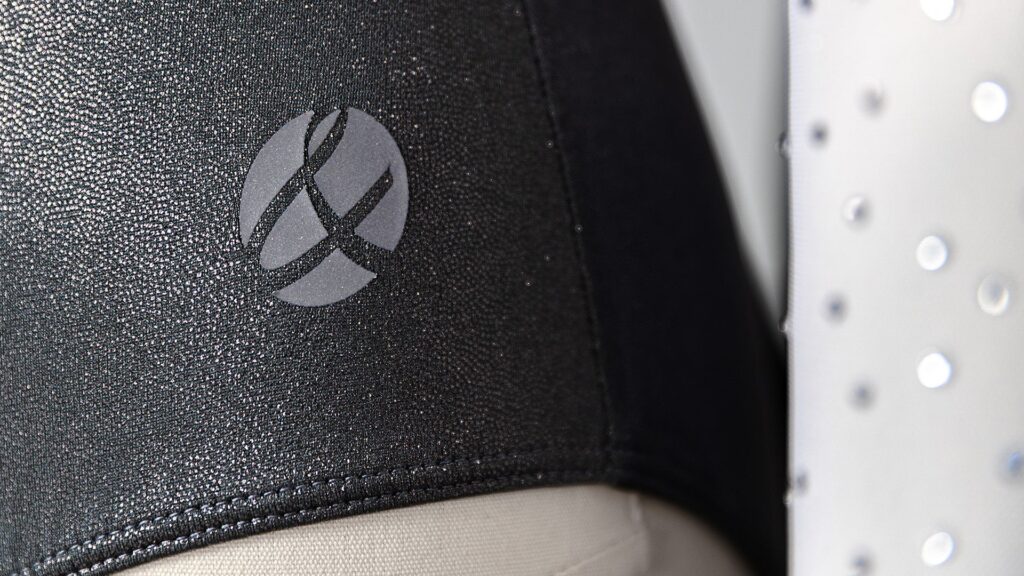
1. Scale Strategically
Bigger is not always better. While visibility matters, oversized logos can disrupt the balance of a design or compete with graphic elements.
When determining scale, consider:
-
Competition visibility from a distance
-
How the logo will appear in action photography
-
Panel structure and seam placement
-
How the design flows with body movement
A logo should feel integrated, not placed on top. Well-scaled logos elevate professionalism. Oversized logos can unintentionally make a design look unbalanced.
2. Placement Zones That Work
Logo placement must account for stretch zones and movement.
Best practice placements often include:
-
Upper chest
-
Side hip panel
Avoid high-stretch distortion areas such as lower torso curves or extreme flex zones. When a logo stretches unevenly, it can warp the brand image and reduce visual clarity. Placement should protect both performance and identity.
3. Embroidery vs Sublimation vs Stones
The application method is just as important as placement. Each option has advantages and limitations.
Embroidery
-
Premium and textured appearance
-
Adds structure and visual depth
-
Heavier than other methods
-
Not compatible with all high-stretch fabrics
Embroidery works well on warm-ups and certain practice pieces but must be evaluated carefully on performance leotards.
Sublimation
-
Lightweight and flexible
-
Durable and long-lasting
-
Excellent for training leos
-
Integrates seamlessly into the fabric
However, sublimation cannot be applied to all fabric types and may have limitations depending on base material selection.
Stone Logo
-
Highly eye-catching
-
Popular for competition leotards and warm-ups
-
Creates elevated visual impact
-
Requires longer production time
Crystals require proper care. Without appropriate washing and handling, stones may loosen over time. Placement must also account for stretch zones to maintain durability.
4. Match the Method to the Purpose
Before choosing an application method, ask:
-
Is this for daily training or competition?
-
What is the timeline?
-
What is the durability expectation?
-
Does this align with our overall brand aesthetic?
A logo choice should reflect your program identity and operational realities. The most effective branding decisions are strategic, not emotional.
To conclude, a well-integrated logo enhances your design. A poorly integrated logo distracts from it. This is especially true for custom gymnastics leotards, where scale, placement, and application method all need to work together so the logo feels like part of the design, not something added on top of it. When those choices are aligned, your logo becomes part of the story your athletes carry onto the floor. And that story should always look intentional.